
Scenic Design by Brandon PT Davis
Working on Urinetown has always been meaningful, but returning to the show after the pandemic gave it renewed urgency. This was my third time designing the production, and the themes of class struggle, scarcity, and corporate control felt sharper than ever. After living through a moment when “essential” workers risked their lives while systems of power remained intact, the satire of Urinetown felt less exaggerated—and more reflective of our reality.
For this production, I wanted to create a world that felt darker, heavier, and more industrial: a dystopia that sits just a step away from our own.
A Concrete World of Control
Visual Inspiration
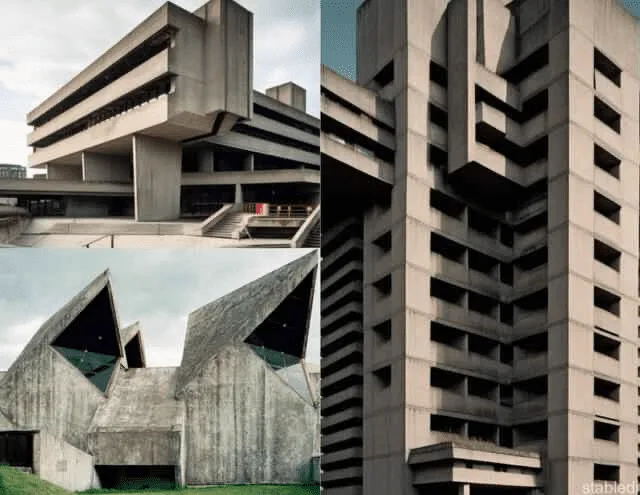
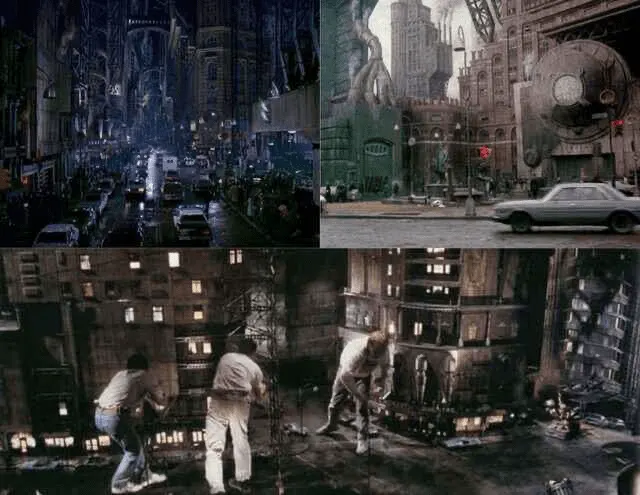
In collaboration with director Dr. Joy Powell, we developed a shared visual language rooted in imposing, authoritarian environments. Our key inspirations included:
- Metropolis and early German Expressionist cinema
- Brutalist architecture
- Blade Runner’s industrial futurism
- Tim Burton’s Gotham City
These references led us toward a dense, concrete “city” that physically and psychologically overwhelms its inhabitants. The environment itself becomes a tool of control—looming, rigid, and inescapable.


Satire Through Familiar Symbols
The satire in Urinetown is most effective when it feels recognizable. One of the clearest expressions of this is the UGC (Urine Good Company) logo, which we redesigned to subtly echo Amazon’s iconic smile. This visual cue reinforces the show’s critique of monopolies and corporate dominance without calling attention to itself too directly.
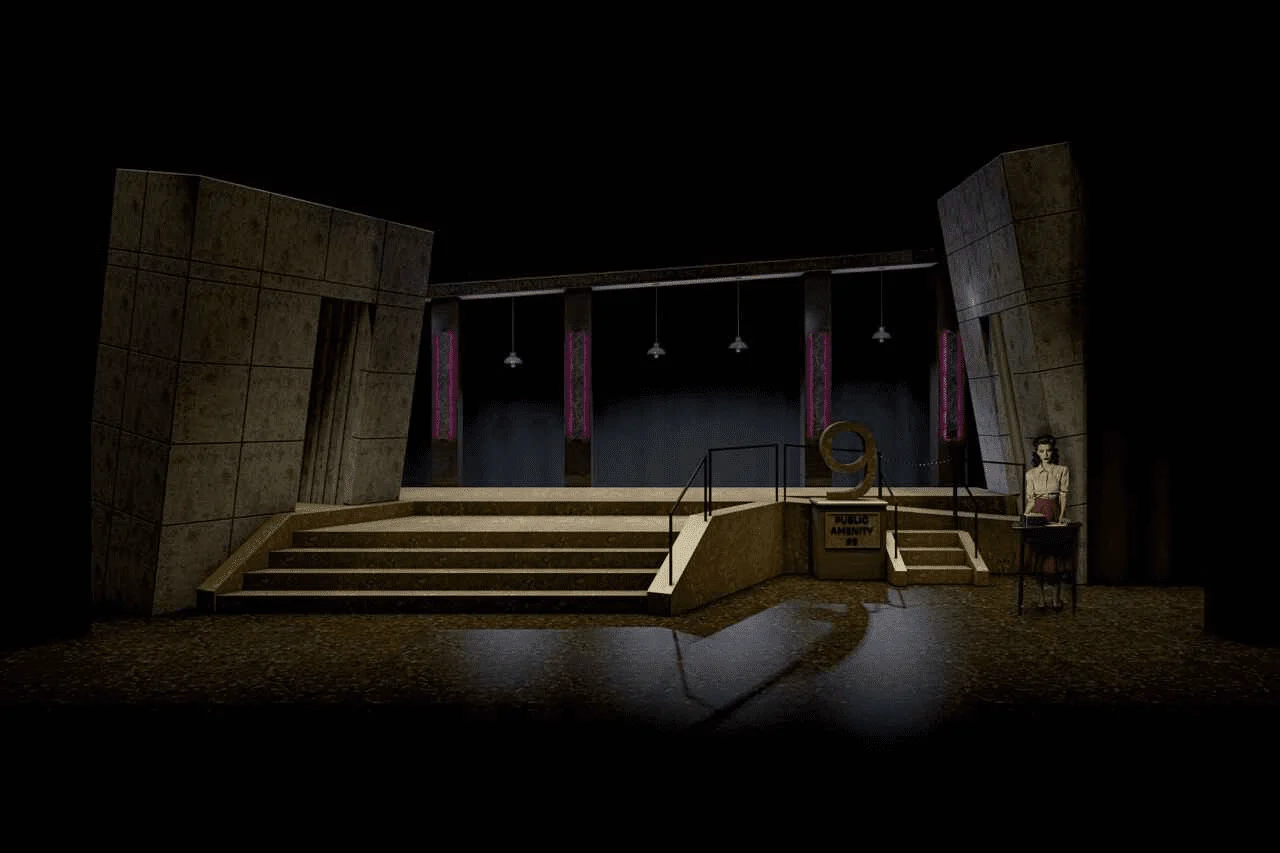
The logo looms over Public Amenity #9, the place where the poor must pay to use the restroom. Its constant presence underscores the cruelty and absurdity of UGC’s power—branding even the most basic human need.
Cladwell’s Office: Power Without Consequence
When Bobby Strong enters Cladwell’s office, he steps into a completely different world. This space was designed to amplify wealth, insulation, and moral distance. Two details define the room:
- Rows of bottled water, treated as decorative excess
- A living tree, thriving where others cannot
These luxuries function as visual shorthand for privilege in a world defined by scarcity. They reinforce the gulf between those who control resources and those who suffer without them, making Bobby’s rebellion feel both necessary and dangerous.

Power Dynamics in a Vertical City
Levels play a crucial role in the storytelling of Urinetown. UGC’s offices occupy the highest elevation, literally towering over the city below. Public Amenity #9 and the spaces inhabited by the poor remain grounded on the lower deck.
This vertical hierarchy allows characters to physically ascend toward power or descend to rally the people. Most of the action centers on Public Amenity #9, reinforcing it as both the lowest point in the city and the emotional center of resistance. The fight for dignity begins in the shadows.
The Secret Hideout: Space for Hope
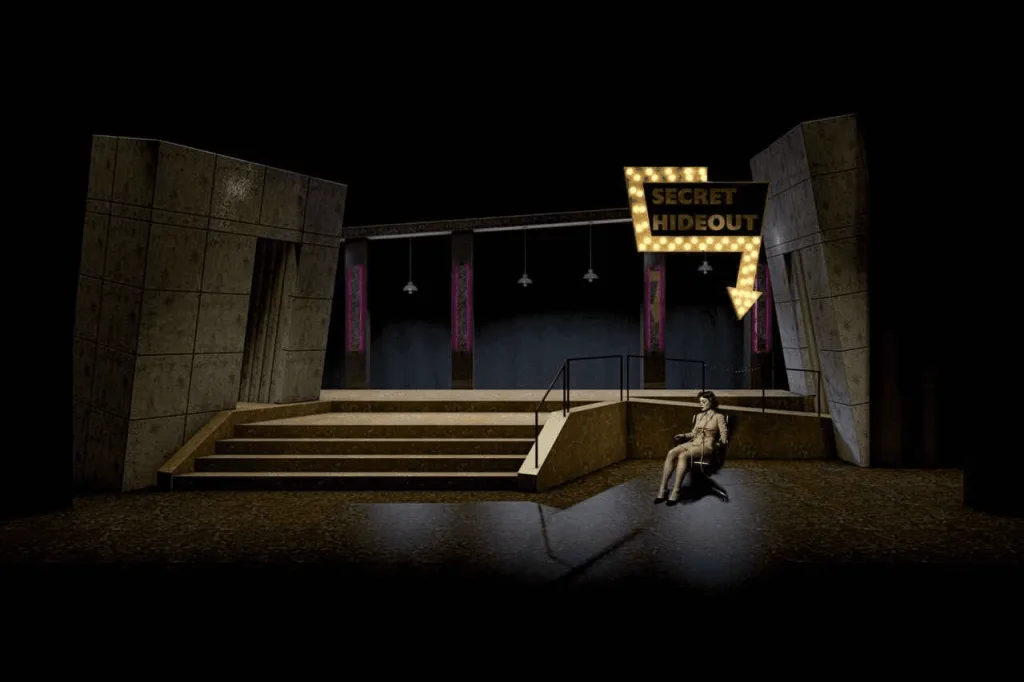
The “Secret Hideout” introduces a shift in both scale and tone. An oversized, intentionally flashy sign injects humor and absurdity, but the space itself is smaller and more intimate. It’s the one place where characters can imagine change.
This contrast reflects the emotional shift from passive endurance to active resistance. Within the concrete jungle, the hideout becomes a rare space for breath, belief, and collective action.
Lighting, Texture, and the Weight of the City
Lighting was essential in shaping the emotional rhythm of the production. While we initially planned for LED tape lighting, lighting designer Vincente Williams suggested LED strips instead. This adjustment allowed for greater flexibility—supporting heightened musical moments while deepening the oppressive atmosphere in quieter scenes.
Materially, MDF was used to simulate smooth, unforgiving concrete surfaces. The result is an environment that feels industrial and relentless, reinforcing a world where resources are scarce and humanity is secondary.
A Set That Shapes Action
In Urinetown, the set is not a backdrop—it actively shapes movement, conflict, and power. Bobby’s journey from Public Amenity #9 to Cladwell’s office mirrors his ideological rise. Each level he ascends represents a confrontation with authority; each descent reconnects him with the people.
This physical relationship between character and space grounds the satire. The humor lands because the stakes feel real, and the architecture itself enforces the systems the characters are fighting against.
Making Urinetown Feel Both Distant and Real
My goal was to strike a careful balance: enough distance for the audience to laugh, but enough familiarity to make that laughter uneasy. Urinetown asks what happens when basic human needs become commodities and when those in power control access to survival itself.
The world onstage may be exaggerated, but it is not unfamiliar. If the design leaves audiences entertained yet unsettled, then it has done its job.
Frequently Asked Questions
What inspired the scenic design for Urinetown?
The design draws from German Expressionist film, Brutalist architecture, and dystopian cinema like Blade Runner. These influences helped create a world that feels authoritarian, industrial, and emotionally oppressive.
How does the set support the satire of Urinetown?
The set uses familiar corporate imagery, exaggerated scale, and vertical hierarchy to reinforce themes of control, scarcity, and class division—allowing the humor to coexist with discomfort.
Why is Public Amenity #9 placed on the lowest level?
Keeping Public Amenity #9 at the lowest elevation reinforces the social hierarchy of the world. It visually positions the poor as “beneath” UGC while making the space the emotional heart of the rebellion.
What role does lighting play in the design?
Lighting defines shifts in tone throughout the show. LED strips allowed for dramatic contrasts—enhancing musical numbers while intensifying the oppressive atmosphere of the city.
How does this production differ from previous designs of Urinetown?
This version leans darker and more industrial, influenced by post-pandemic realities. The satire feels sharper, and the world is intentionally closer to our own, making the social commentary harder to ignore.


